Total: £0.00
Taxes and shipping calculated at checkout

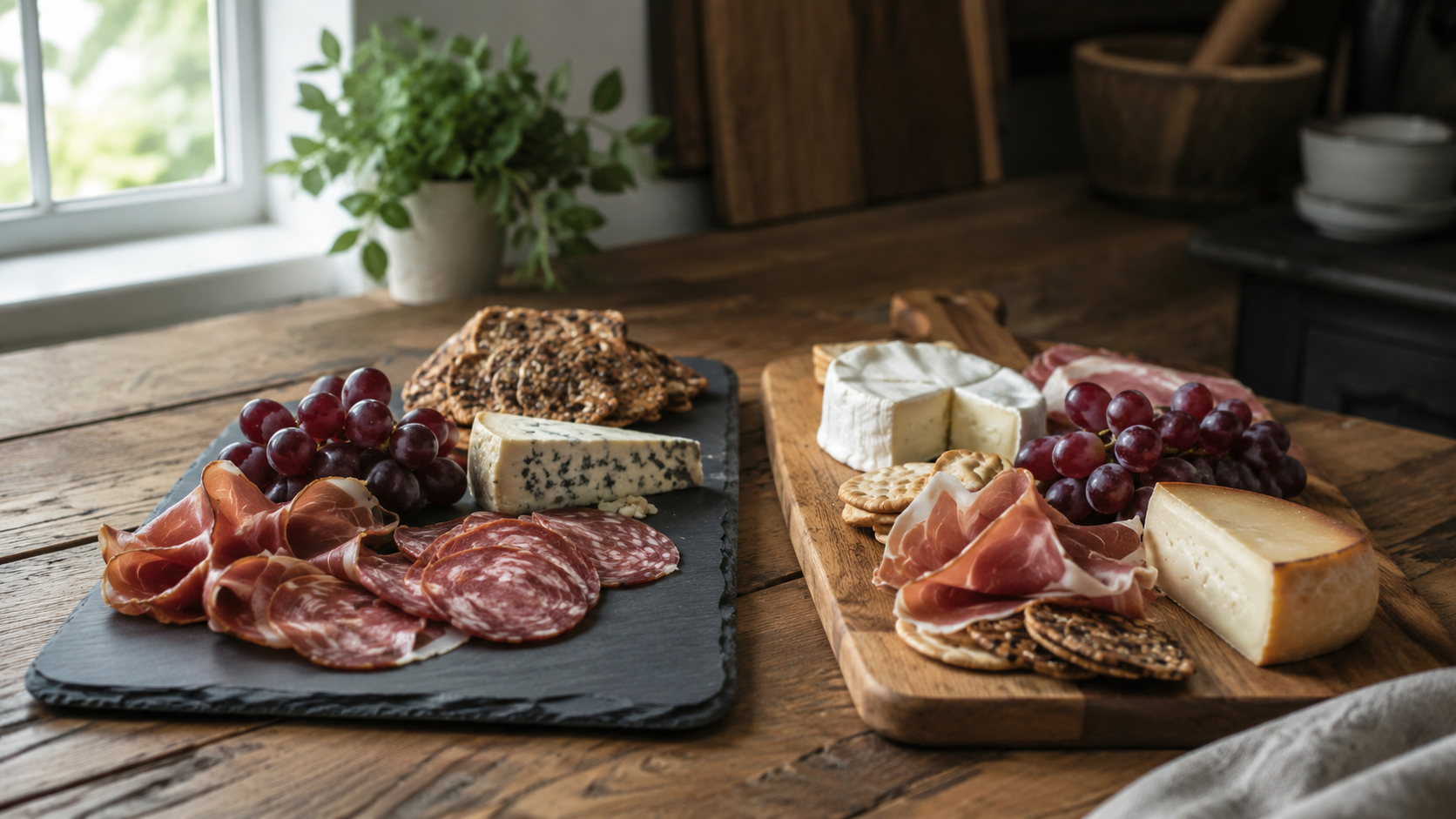
A grazing board and a chopping board get treated as the same thing in most gift guides, and they're not. A chopping board takes the knife work. A grazing board is what goes on the table once the knife work is done — the surface guests eat straight off, photograph, and remember. Whether a personalised slate grazing board or a wooden one is the right choice for charcuterie comes down to how it behaves once food, oil and time get involved, and that's the part most buying guides skip.
Chopping boards are worked surfaces. They take a blade, they get scored, and a certain amount of wear is the point — it means the board is being used. Oak earns that job because it's dense enough to resist deep cuts and forgiving enough not to blunt a knife edge too quickly.
Grazing boards have a different brief. Nobody is meant to cut into them. They exist to hold cheese, cured meat, crackers and fruit in a way that looks deliberate, and to survive being wiped down, packed away and brought back out for the next gathering. That's a presentation surface, not a prep surface — and it's why the material choice matters more than it would for a board that's going in a drawer.
An engraved name or date on a chopping board will eventually sit under years of knife marks — the personalisation becomes part of the board's history. On a grazing board, the engraving stays the focal point. It's the first thing anyone reads before the food goes on, which is why the material it's cut into needs to hold detail cleanly and keep it legible after repeated washing.
Slate is the material most people picture when they say "grazing board" — dark, flat, a natural stone finish that photographs well against pale cheeses and pink cured meat. It's also the material we get the most questions about, mostly around whether it's actually food-safe to use this way.
Natural slate is non-porous once it's been through a food-safe seal, which means it doesn't absorb oil, wine or beetroot juice the way an unfinished wood surface would. That's the main practical argument for slate over wood at a grazing table: less staining, and a wipe-clean surface that doesn't need re-oiling. The laser cuts a fine, pale line into the stone rather than a deep groove, so the engraving reads as a contrast mark rather than a carved one — crisp against the dark surface, and it doesn't catch food debris the way a deeper wood engraving can.
Where slate struggles is edge chipping. It's a stone, and stone is unforgiving if it's dropped or knocked against a hard counter edge. It also scratches under a knife, which is exactly why it should never double as a cutting surface — every scratch cuts through the sealed finish and exposes raw slate underneath, which is where staining actually starts.
Warm water and a soft cloth is enough for most clean-ups. Avoid anything abrasive near the engraved area — a scouring pad will dull the contrast the laser creates and make the personalisation harder to read over time. Left to air dry rather than towel-dried with force, a sealed slate board keeps its finish for years of normal use.
Wood is the warmer-looking option, and for a lot of customers that matters more than the material science — it photographs well for a rustic table setting, and it doesn't have the "cold stone" feel some people associate with slate. Within wood, oak and acacia behave differently enough that they're not interchangeable.
Our oak chopping board is built for the knife-work side of the job — dense grain, genuinely hard-wearing, and the reason we recommend it for cutting rather than serving. For a board that's staying on the table as the presentation piece, our personalised acacia serving board is the better match: the grain runs differently at every cut, so no two boards look quite the same, and the surface has enough warmth in the tone to sit well against charcuterie without competing with it.
Acacia is naturally higher in oil content than oak, which gives it some built-in resistance to moisture without needing constant re-oiling. It still needs occasional care — a food-safe mineral oil worked into the grain every few months keeps it from drying out — but it's more forgiving than oak if a board gets left out overnight with cheese still on it.
Wash by hand, never in a dishwasher — heat and prolonged soaking are what crack wooden boards and lift engraving over time. Dry it standing up rather than flat, so air reaches both sides evenly, and oil it before the surface starts looking pale or dry to the touch. That's usually a visual cue, not a fixed schedule.
If the board is going to see red wine, beetroot hummus or anything oil-heavy on a regular basis, slate is the lower-maintenance choice — wipe-clean, no oiling, and the engraving stays sharp against the dark background. If the board is more occasional — a wedding table, a housewarming centrepiece, something that gets used a handful of times a year — a wooden board earns its keep through warmth of tone and the fact that engraving on wood tends to feel more personal, more like a keepsake than a kitchen tool.
Neither material should be asked to do the other's job. A slate board that gets used as a chopping surface will scratch and eventually stain along those scratch lines. A wooden board that sits out uncovered for hours with oily meat on it will darken unevenly and need more frequent conditioning. Match the material to how the board will actually be used, not just how it looks in the product photo.
For a full spread, a lot of our customers pair whichever board they choose with our personalised cheese knife set — matching engraving across the board and the knives reads as a set rather than separate purchases, and it's one of the more requested combinations we get for wedding and housewarming gifts.
Not recommended. A knife will scratch through the sealed finish, and once the seal is broken the slate underneath is exposed to staining. Slate is a serving surface, not a cutting one — keep a separate chopping board for prep.
On slate, the engraving is essentially permanent under normal use — it won't fade with washing. On wood, engraving can soften slightly over years of oiling and handling, but it stays legible far longer than most people expect, especially on a board that's serving rather than being cut on.
Both work well, and the choice usually comes down to the rest of the table styling. Slate suits a darker, more modern table setting and photographs with strong contrast. Wood — particularly acacia — suits a warmer, rustic setting and tends to read as more of a keepsake the couple will keep using afterwards.
Whichever material fits your table, personalise it with names, a date or a short message at checkout, and it's dispatched within 1–3 working days. Browse the full range in our personalised slate gifts collection, or get in touch if you're planning a bulk order for an event.