Total: £0.00
Taxes and shipping calculated at checkout
Most people find the traditional anniversary list about four days before they need it. They search the year, get told "leather" or "wood" or "steel", and then have to work out what that means in practice. This is the part the list never covers: how those materials actually behave once you put a name and a date into them. We cut all three, so here is what we know about engraved anniversary gifts from the workshop side.
The list itself is Victorian in origin and mostly arbitrary. But it does one useful thing, which is to narrow the field. "Buy him something for our fifth" is an impossible brief. "Buy him something wooden" is a solvable one.
The traditional years run paper, cotton, leather, linen, wood, iron, wool, bronze, pottery, tin, steel, and on upwards to silver at 25 and gold at 50. Three of those years land squarely on things we cut every week: leather at three, wood at five, steel at eleven.
Those three are also the years where an engraved gift makes the most sense, because each one takes a mark in a completely different way. A name cut into leather looks nothing like the same name cut into steel, and the difference is not just aesthetic. It changes how long the gift stays legible.
Leather does not get cut so much as darkened. The laser burns the surface, and on genuine leather the mark comes up a deep chocolate brown that sits slightly below the surface. Run a thumb over it and you can feel it.
Colour is the thing people get wrong. On tan or light brown leather the contrast is high and the engraving reads from across a room. On black leather it is subtle to the point of being almost invisible in low light, which some people want and most do not expect. If you are choosing between colours and the text matters, go lighter.
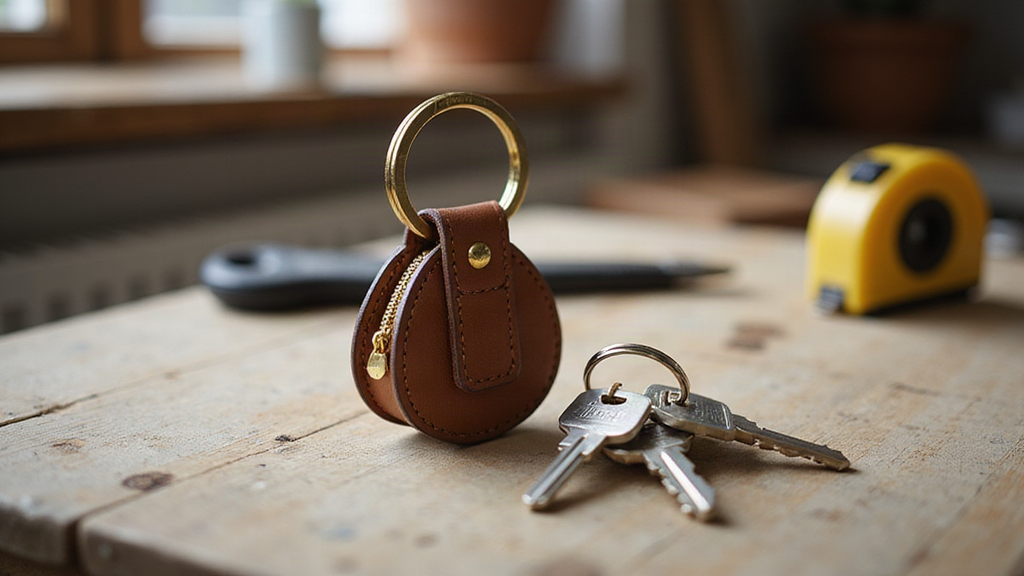
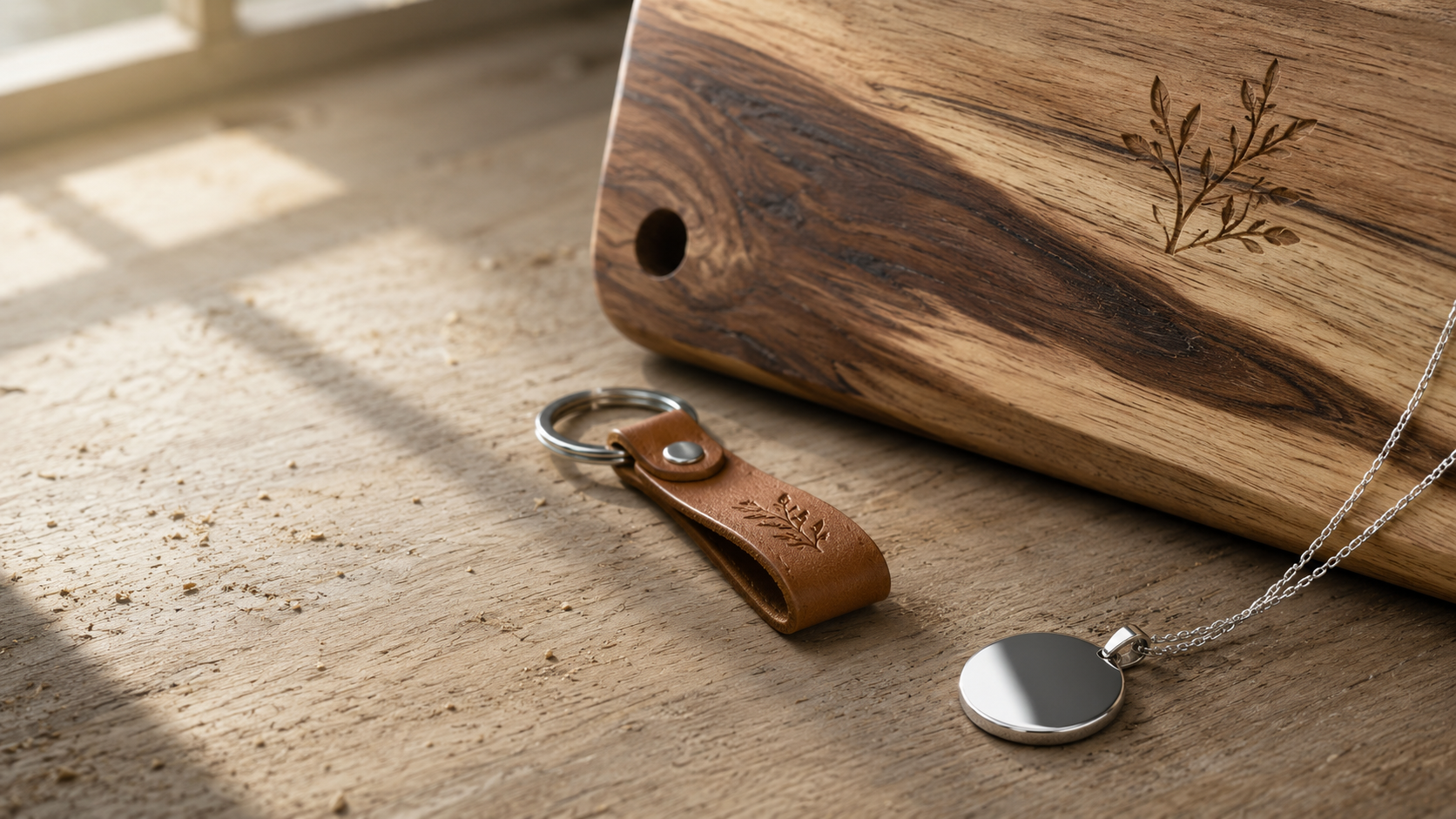
Our personalised leather keyring gets ordered for third anniversaries more than anything else in that material, usually with two initials and a year. Leather also has the advantage of ageing well. It softens, it picks up a shine where it is handled, and the engraving stays put while everything around it changes. Which is a reasonable thing to give someone at three years.
Wood is the year with the most options and the most ways to get it wrong. The variable is grain.
Acacia has strong figuring, with pale and dark bands running through the same board. Engraving reads beautifully across the light areas and then partly disappears where it crosses a dark band. We work around it by placing text in the calmer sections of the board, but it means no two acacia pieces come out identical. Some people love that. Some people ordering a matched pair do not.
Solid oak is more even in tone, so lettering stays consistent from one end of the text to the other. Bamboo is the most uniform of all, which is why it is our default when the engraving is fine or when Arabic or script fonts are involved.
For a fifth anniversary the request is nearly always something for the kitchen, and a board is the practical answer. Our personalised acacia serving board is the usual choice. One honest note: an engraved board that gets used daily will fade at the mark over a few years, because knives and washing take the surface down. If the intention is a keepsake rather than a tool, say so when you order and we will place the engraving off to one side where it will survive.
To make the wooden anniversary gift into a complete serving set, pair the board with our personalised cheese knife set, engraved across six acacia handles.
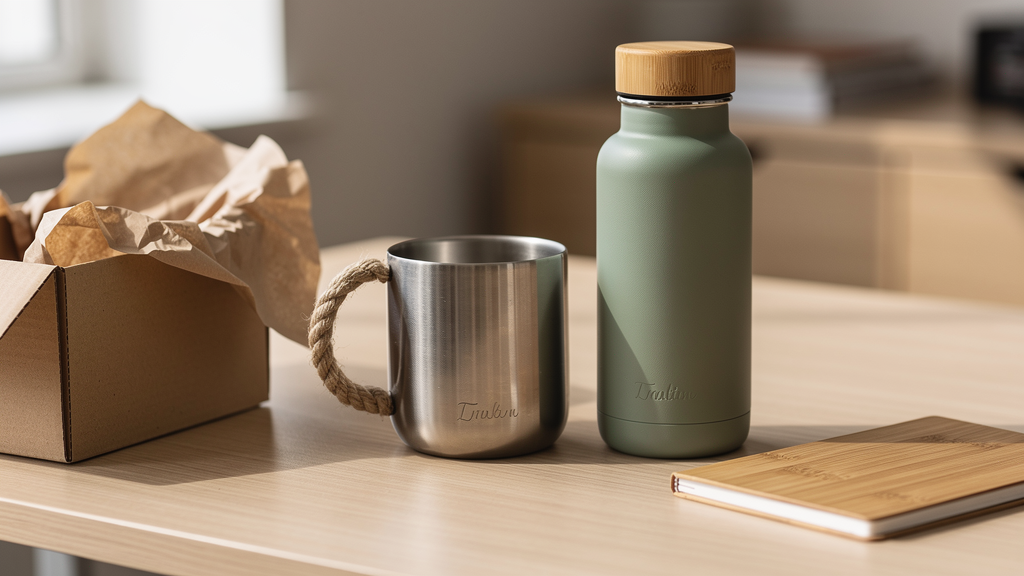
Stainless steel does not take a cut. What the laser produces is a frosted white mark on the surface, and on a mirror-polished piece that contrast is as sharp as anything we make. It also does not fade, ever, in a way that wood and leather eventually will.
The constraint is depth. Because the mark is shallow, text has to be short and reasonably well spaced. Two names and a date works. A paragraph does not. Our engraved stainless steel pendant is 3cm across, which sounds small until you try to fit a full sentence on it and understand why we keep suggesting you cut words.
Eleven is an odd year to celebrate properly and most people skip it. The ones who do not tend to be marking something specific, and steel suits that. It is the least sentimental material we work with and it lasts the longest.
The other years still map onto things we make, with a bit of interpretation.
Year ten is tin, which in practice means aluminium. Anodised aluminium is our favourite material to engrave, because the laser lifts the coloured anodising away to expose bright silver underneath. The contrast is higher than anything else we do in metal, and the mark is permanent because it is the coating that has been removed rather than a surface that has been marked.
Year one is paper, and a notebook covers it. Year nine is pottery, which we do not cut, but slate is a reasonable stand-in if the recipient is thinking about the spirit of the list rather than the letter of it. Year twenty-five is silver, and while we do not work in silver, a mirror-polished stainless piece reads as silver to anyone not holding a jeweller's loupe. We say that plainly rather than pretending otherwise.
For anything past thirty the list moves into gemstones and we are out of our range. At that point the engraving usually goes onto something the couple will actually use, and the year stops mattering.
By some distance, the most common reason we are asked to remake an anniversary piece is a wrong date. Not a typo in a name. A date. Usually because the wedding date and the date the couple got together have got mixed up, or because someone has written the year they are celebrating rather than the year they married.
Read the date back out loud before you send it. That one habit prevents most of the reorders we see.
The anniversary engravings that hold up are the plain ones. Two first names and a date. Or two initials and a year. The ones that date badly are the ones with a quote from the first dance and a decorative border, because a lyric that meant everything at five years can land oddly at fifteen.
If you want something warmer than names, a place works better than a phrase. A town, a road, or a set of coordinates says the same thing without committing to a sentiment that has to hold for decades.
Script fonts look right on leather and wood and start to close up on small steel pieces, where the fine connecting strokes get lost in the frosting. On anything under about 4cm we will steer you towards a cleaner face. It is not a preference, it is legibility.
Anniversaries have a fixed date, which makes them easier to plan than most of what we make and also less forgiving when they are left late.
Standard orders are processed within 1 to 3 business days, and UK delivery is 2 to 4 business days after dispatch. Weekends and bank holidays do not count. Production starts when the personalisation is confirmed rather than when the order is placed, so if you order on a Friday and send the engraving details on Monday, the clock starts Monday.
Work back from the date and give yourself a week and a half. If you are inside that window, send us the date you need it for and we will tell you honestly whether it will make it rather than let you find out.
Three is leather, five is wood, eleven is steel. Leather darkens and ages with the person carrying it. Wood is the most personal and the least permanent. Steel outlasts both and asks you to say less.
Two names, one date, checked twice. Personalise yours above.